
A Quick Recap: Losing Organic Search and the Alligator Chart Problem
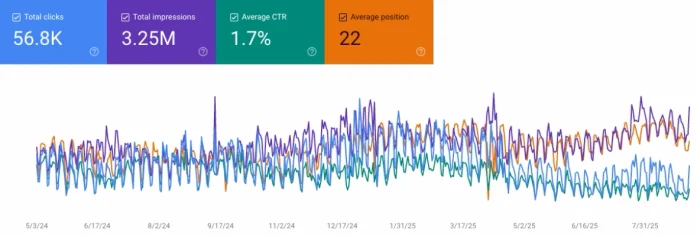
As we’ve discussed previously, AI search and zero-click search results have played havoc with organic traffic to websites, resulting in the dreaded alligator chart (see below). By providing information right in the search results, users have less incentive to click through to the websites that provide that information.
First, you need to understand that the old way of thinking about website success in terms of pageviews and visitors is no longer viable. This is due not only to AI and zero-click search results, but also to the influence of location and browsing habits on search results. Long gone are the days when you could rank for keywords just from the amount of words on your website. And for that you should be thankful.
You still need to have clean, relevant and useful content that is organized in an easy-to-read manner. Your site’s architecture still needs to make sense to humans and search engines alike. Losing organic traffic can hurt, sure, but all the organic traffic in the world doesn’t matter if your website doesn’t do what your business needs it to do.
So with organic search traffic dropping, with people getting more of their answers straight in AI chatbots or AI-generated search results, how do you close the traffic gap? And more importantly, how do you make sure when visitors do arrive, they take the actions you need them to take?
The short answer is paid advertising and rethinking how we measure website performance. But you’re not just going to dump money into a hole and cross your fingers. Before you spend a dime trying to close the traffic gap, you must address conversion tracking and landing page optimization.
Conversions
The first part is to make sure conversion tracking is set up correctly so that, no matter what the traffic numbers, you know if your website is functioning the way it should. If your conversion tracking is broken, the rest of this post isn’t going to help.
Here at DR, we work in a number of digital spaces, from travel and tourism to higher education to convenience stores. In each case, we’re promoting and tracking conversions that don’t translate directly into dollars. For example, we regularly measure guide requests and newsletter sign-ups for travel and tourism, app downloads and rewards sign-ups for c-stores and application submissions for higher ed.
In 2025, after successfully wrangling the Meta Conversions API for one of our partners, we conducted a deep audit of all conversion tracking across all partners. Through incremental changes, iteration and testing, we improved conversion tracking, making it more reliable.
The image below shows how organic conversions improved as we worked through tightening up our partner’s conversion tracking.
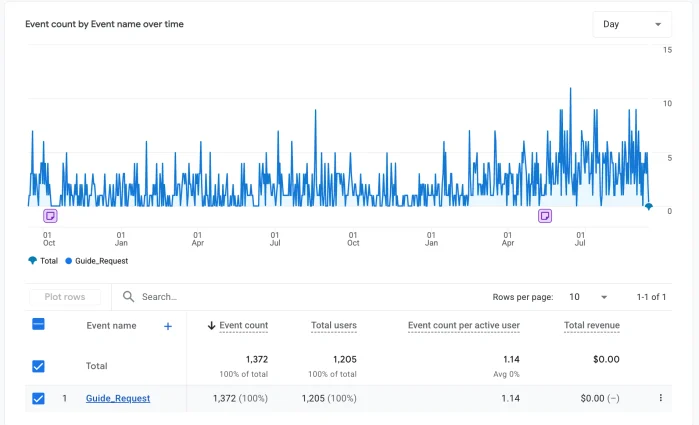
Instead of just relying on GA4 conversion data, we now had comparable data coming from the ad platforms. By comparing the two sets, we could see a couple of things. One, how the ad platform reported conversions compared to the website (GA4). Not surprisingly, because the ad platforms use different, broader attribution models, they generally reported more conversions than GA4. So, if your ad platform numbers are off a little bit from GA4, that’s no cause for alarm. The other point of visibility we now had was whether there was a disconnect between those numbers. If the numbers were off by a significant margin, that was an indicator that something was broken. If they were similar, we could feel confident that our results were real.
Having your tracking dialed isn’t just important for paid media campaigns, it’s important for all sources of traffic, so you can understand what’s working in the bigger picture. You can compare channels and identify other possible ways to boost incoming traffic beyond paid media, such as building referral sources or increasing email marketing efforts.
Landing Pages
Have you ever just decided to use an existing page for a landing page? If so, it’s not a dealbreaker.
However… it would be a mistake to use an existing landing page if it’s not optimized for paid media campaigns. It’s not unusual to encounter unadulterated landing pages that ask too much of visitors, obfuscating which actions they should take. If every action is important, none of them are. Don’t make your users hunt for the main CTA. For example, if form fills are the goal for the campaign, form fills should be front (and up the page!) and center. (A future post will dig deeper into how to set your landing pages up for success and improve as you go).
Being intentional with landing pages is the key. For our CVB partners, we’ve moved away from campaign landing pages and send visitors directly to the existing guide request page to remove an extra step of clicking through to the guide request page. And the guide request page has one call to action: Request a free guide. If visitors reach this page and don’t convert, there’s likely some disconnect between our ad creative and the landing page.
To account for this, we make sure the landing page delivers on the promise of the ad — the messaging, the offer, the CTA — and then a/b test various elements of the page (one at a time, of course), using the Stellar platform to get the best performance.
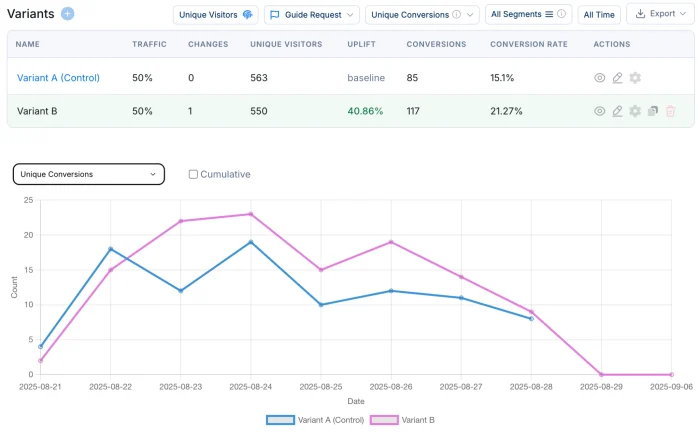
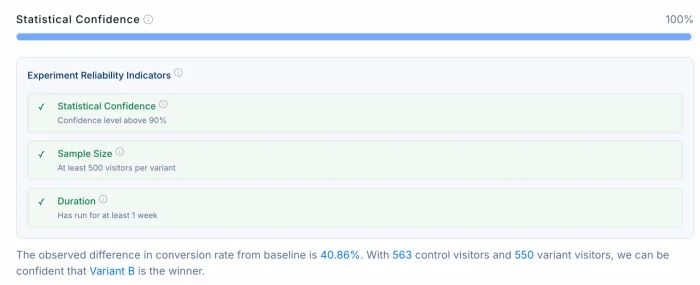
We’ve learned during our a/b tests that visitors aren’t usually that interested in reading more than absolutely necessary. They’ve come to take action. Also, the further up the page the form is, the better. Using Microsoft Clarity to look at scroll depths, we found that the percentage of people scrolling far down the page drops off pretty quickly. You’ve got a very short window to make an impression. And finally, the more a person has to put into a form, the less likely they are to complete the form. None of this is new news, but it bears keeping these things in mind when considering your landing page.
The Time To Buy Is Now
With your conversions humming along and your landing page ready for prime time, now is the time to leverage your paid media conversion machine and map out your strategy. The key here is to not only get traffic to your site, but to get more qualified traffic that will boost your KPIs in a meaningful way. By doing this, you can make up shortfalls that may be occurring due to AI and zero-click search results.
Depending on what you’re offering, an always-on search campaign probably makes a ton of sense. If there are seasonal considerations, you can always rotate ads into the mix that speak to seasonal offerings or create ad groups with season-specific keywords. It’s probably best to start off with Maximize Conversions and, as you hit critical mass on conversions, say 15-30, move to Target CPA or Target ROAS.
For social channels, optimizing your campaigns for conversions is the play here. You’ve spent all that time fine-tuning event tracking, so put it to work. Let the platforms find the people who are likely to take the action you want. Something to note: you can usually tell within a week if your social media campaign is going to work or not. If you’re optimized for conversions and they’re not coming — and if that’s how success is being measured — don’t waste several weeks before reallocating to a channel that does convert.
The Bottom Line
There are three key elements needed to make up for declining organic traffic:
- Conversion tracking: Ensure accurate conversion tracking across all platforms so you can reliably measure if your website is functioning correctly and compare channels.
- Optimized landing pages: Make sure landing pages are intentionally designed for paid media campaigns with clear, prominent calls to action, simplified user steps and optimized content based on A/B testing.
- Paid media strategy: Leverage paid advertising (such as always-on search campaigns and conversion-optimized social media campaigns) to close the traffic gap and drive qualified traffic that boosts key performance indicators.
This strategy is pretty straightforward, it just requires rolling up your sleeves and putting in the prep work. Making sure these three elements are rock solid and your paid media will go from being a black box that may or may not work to something you can leverage for real growth.