

West Virginia State Parks Website
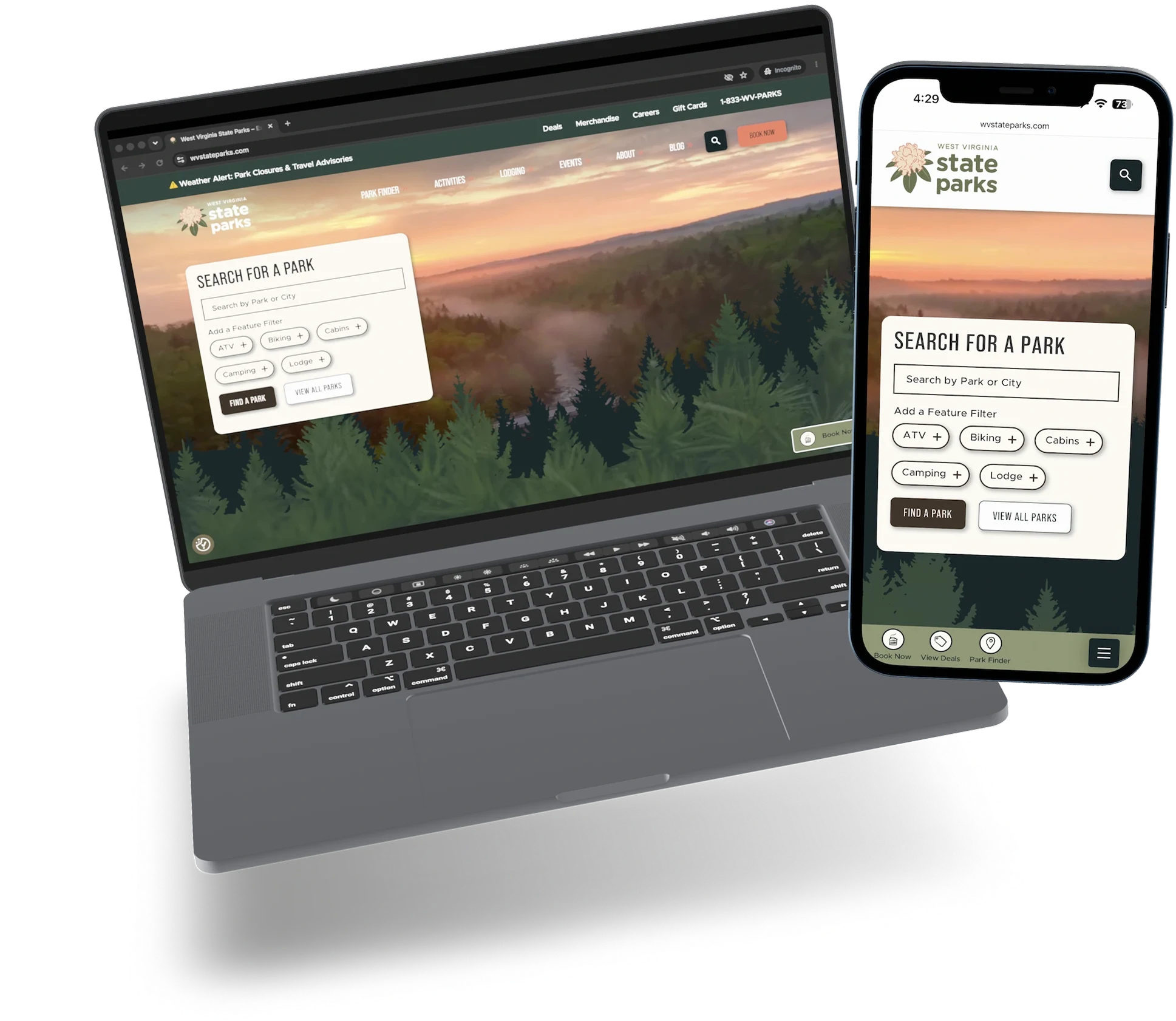
West Virginia State Parks’ website created barriers for visitors during park discovery and booking. DR proposed a park-forward architecture strategy, restructuring the site around actual user behavior. The redesign made park discovery intuitive, streamlined the booking process, removed navigation obstacles and improved search visibility, directly increasing bookings and revenue.
The Goal
The project aimed to restructure the website around how visitors actually search for parks, making discovery and booking intuitive and seamless. By eliminating barriers in the visitor journey, the redesign sought to improve user experience and directly increase bookings and revenue for the state parks system.
The Strategy
Park-forward architecture positioned individual park pages as primary destinations, while SEO and schema markup enhanced search visibility. By aligning the digital structure with how visitors search for parks, the redesign optimized discovery and booking to fuel engagement and revenue growth.
The Results
Post-launch results validated the strategic approach. Search impressions, clicks and session engagement significantly improved. Mobile performance delivered exceptional gains. These improvements directly translated to increased bookings and revenue, proving that aligning digital structure with user behavior drives business success.
-
7.87 million
search impressions -
40%
increase in total clicks -
222%
increase in average session engagement time -
53%
increase in mobile engagement -
342%
increase in mobile engagement time -
23.8%
increase in engaged sessions